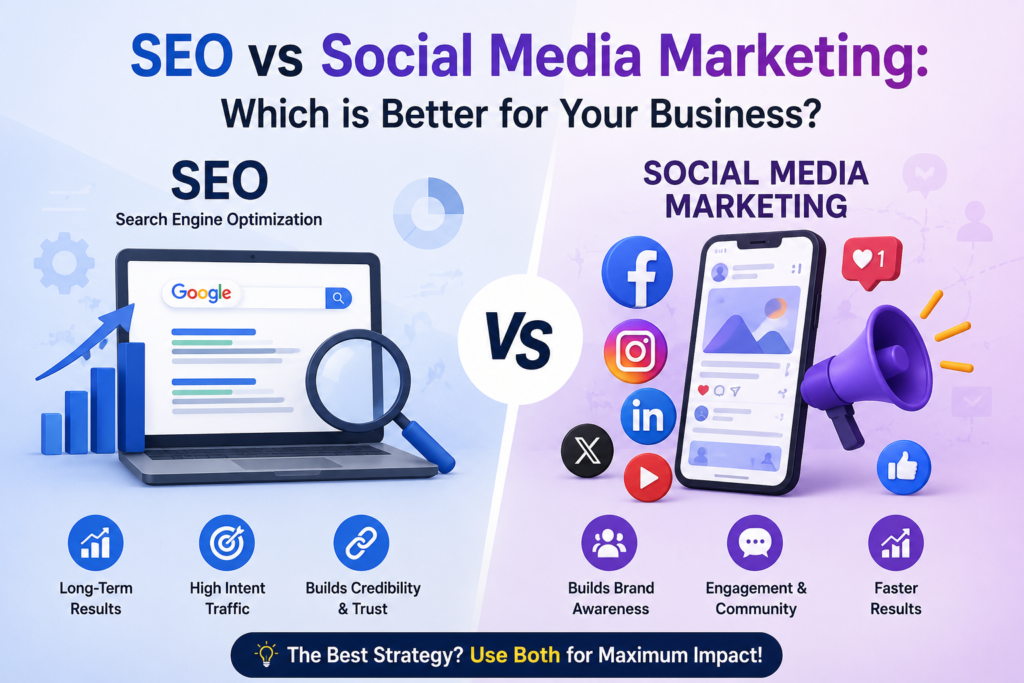
SEO vs Social Media Marketing
SEO vs Social Media Marketing: Which is Better for Your Business? In today’s fast-paced digital landscape, businesses are constantly searching for effective ways to grow online, attract customers, and increase revenue. Two of the most powerful tools in digital marketing are Search Engine Optimization (SEO) and Social Media Marketing (SMM). Both strategies have transformed how brands connect with their audiences, but they work in very different ways. A common question many business owners, freelancers, and even students ask is: “Should I focus on SEO or Social Media Marketing?” The answer isn’t as simple as choosing one over the other. Each has its own strengths, limitations, and ideal use cases. In this comprehensive guide by Clicks & Growth, we’ll break down SEO and social media marketing in detail, compare their benefits, and help you decide which strategy is best suited for your business goals. What is SEO? Search Engine Optimization (SEO) is the process of optimizing your website so that it ranks higher on search engines like Google, Bing, and Yahoo. The higher your website appears in search results, the more likely users are to visit it. SEO focuses on improving visibility through organic (non-paid) methods. It involves multiple techniques such as keyword research, content creation, technical improvements, and backlink building. Key Components of SEO: 1. On-Page SEOThis includes optimizing elements on your website like: Content quality Keywords usage Meta titles and descriptions URL structure Internal linking 2. Off-Page SEOThis focuses on building your website’s authority through: Backlinks (links from other websites) Guest posting Brand mentions 3. Technical SEOThis ensures your website performs well, including: Fast loading speed Mobile responsiveness Secure connection (HTTPS) Proper indexing Example: If a user searches for “best digital marketing agency in India” and your website appears on the first page, SEO has done its job effectively. What is Social Media Marketing? Social Media Marketing (SMM) is the use of social platforms like Instagram, Facebook, LinkedIn, Twitter (X), and YouTube to promote your brand, products, or services. It focuses on creating engaging content, interacting with users, and running paid advertisements to reach a broader audience. Key Components of Social Media Marketing: 1. Content CreationPosts, reels, stories, videos, and graphics that attract attention. 2. EngagementInteracting with followers through comments, messages, polls, and live sessions. 3. Paid AdvertisingRunning targeted ads to reach specific audiences based on interests, demographics, and behavior. 4. Analytics & InsightsTracking performance metrics like reach, engagement, clicks, and conversions. Example: If you post an Instagram reel showcasing your services and it reaches thousands of users within hours, that’s the power of social media marketing. SEO vs Social Media Marketing: A Detailed Comparison Factor SEO Social Media Marketing Primary Goal Website visibility Brand awareness & engagement Traffic Source Search engines Social platforms Cost Mostly free (time investment) Free + Paid ads Speed Slow but steady Fast but temporary Longevity Long-term results Short-term impact Audience Intent High (users are searching) Medium (users are browsing) ROI High over time High with good ad strategy Content Type Blogs, landing pages Posts, videos, stories Advantages of SEO SEO is often considered the backbone of digital marketing because it provides consistent and sustainable results. 1. Long-Term Growth Unlike paid ads that stop delivering results when your budget ends, SEO continues to drive traffic over time. 2. High-Quality Traffic Users searching on Google already have a need or problem, making them more likely to convert into customers. 3. Cost-Effective Strategy Once your content ranks, you don’t need to pay for every click, making SEO a budget-friendly option. 4. Builds Credibility and Trust Websites that rank higher are often perceived as more reliable and authoritative. 5. Better User Experience SEO also focuses on improving website usability, speed, and navigation. Limitations of SEO While SEO is powerful, it also has some challenges: Takes time to show results (3–6 months or more) Requires continuous effort and updates Algorithm changes can affect rankings Competitive keywords can be difficult to rank for Advantages of Social Media Marketing Social media marketing offers a dynamic and interactive way to grow your brand. 1. Instant Results You can reach thousands of users within minutes through posts or ads. 2. Strong Engagement Direct interaction with your audience builds relationships and trust. 3. Brand Awareness Social platforms help your brand become recognizable and memorable. 4. Targeted Advertising You can target specific audiences based on age, location, interests, and behavior. 5. Viral Potential Creative content can go viral and bring massive exposure. Limitations of Social Media Marketing Results are often short-lived Requires consistent posting Organic reach is decreasing Paid ads can become expensive High competition for attention When Should You Choose SEO? SEO is the right choice if: You want long-term and sustainable growth Your business relies on website traffic You aim to generate consistent leads You target users actively searching for your services Best for: Service-based businesses Bloggers and content creators E-commerce websites Local businesses (through local SEO) When Should You Choose Social Media Marketing? Social media marketing is ideal if: You want quick visibility and results You want to build a strong brand presence Your audience is active on social platforms You plan to run advertising campaigns Best for: Startups and new brands Influencers and freelancers Fashion, lifestyle, and creative businesses Businesses targeting younger audiences SEO and Social Media: Better Together Instead of choosing one over the other, the smartest strategy is to combine both. How SEO and Social Media Work Together: 1. Content PromotionShare your blog posts and website content on social media to increase visibility. 2. Traffic BoostSocial media can drive traffic to your website, indirectly supporting SEO. 3. Brand AuthorityA strong social presence builds trust, which can improve your SEO performance. 4. Keyword InsightsSocial media trends can help you discover new keywords for SEO. 5. Better Conversion RatesUsers who see your brand multiple times (search + social) are more likely to convert. Practical Strategy for Businesses Here’s a simple strategy you can follow: Step 1: Build Your Website with SEO Create high-quality blog content Optimize for keywords Improve