What is Digital Marketing? A Complete Beginner’s Guide
In today’s fast-moving digital world, businesses are no longer limited to traditional ways of promotion like newspapers, TV ads, or billboards. Instead, they are shifting toward smarter, faster, and more targeted methods of reaching customers online. This modern approach is known as digital marketing.
Whether you are a student, business owner, or someone curious about online growth, understanding digital marketing is essential. In this guide, we’ll break down everything you need to know—from basic concepts to key strategies—in a simple and practical way.
What is Digital Marketing?
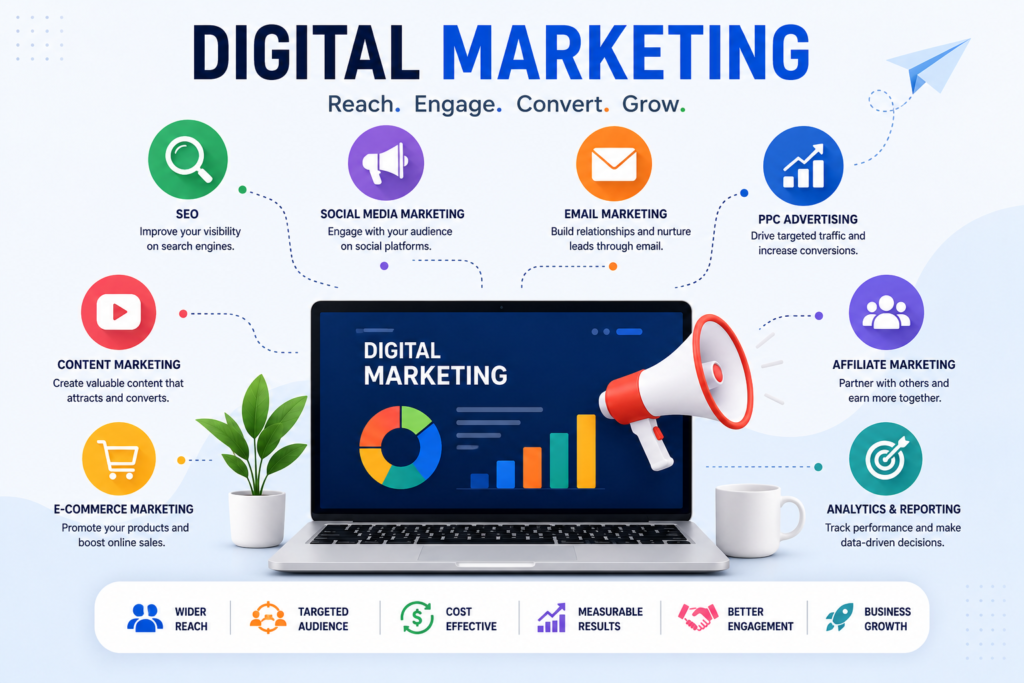
Digital marketing is the practice of promoting products, services, or brands using digital channels such as the internet, search engines, social media, email, websites, and mobile apps. Its main goal is to reach the right audience, generate leads or sales, and build long-term customer relationships.
Why is Digital Marketing Important?
Digital marketing has become a necessity rather than an option. Here’s why:
1. Massive Online Audience
Millions of people are active online every day. Platforms like Google, Instagram, Facebook, and YouTube give businesses direct access to potential customers.
2. Cost-Effective
Compared to traditional marketing, digital marketing is more affordable and offers better returns on investment (ROI).
3. Targeted Marketing
You can target specific audiences based on age, location, interests, and behavior, making your campaigns more effective.
4. Measurable Results
With tools like Google Analytics, you can track performance in real time—clicks, traffic, conversions, and more.
5. Global Reach
Digital marketing allows even small businesses to reach customers worldwide.
Types of Digital Marketing
Digital marketing is a broad field with several important components:
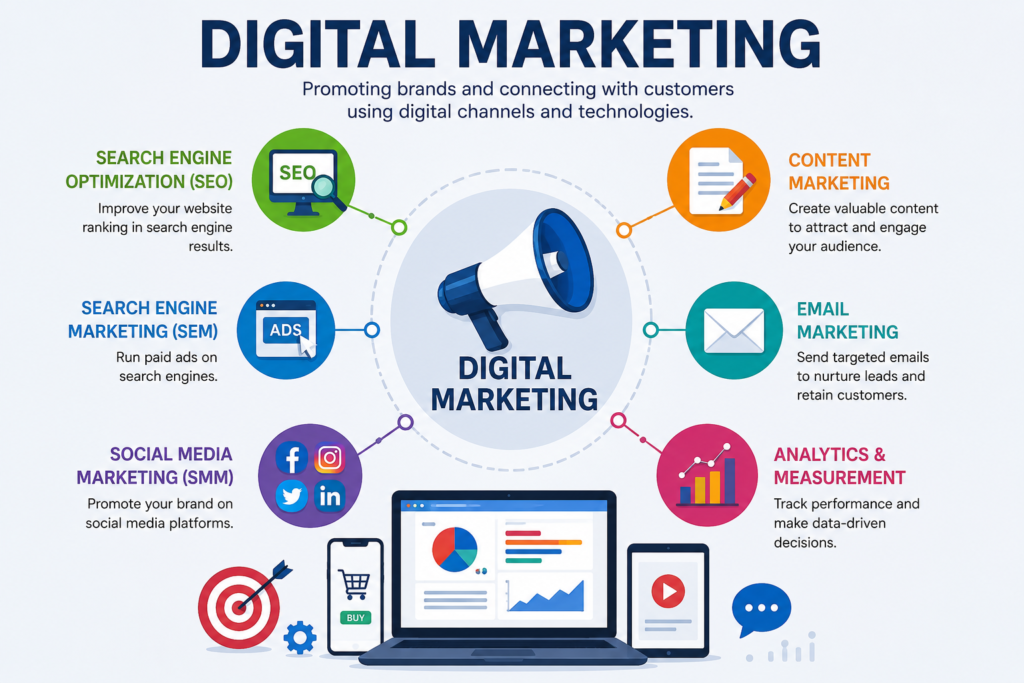
1. Search Engine Optimization (SEO)
SEO is the process of improving your website so it ranks higher on search engines like Google. The higher your ranking, the more visibility and traffic you get.
Example: When someone searches “best digital marketing agency,” SEO helps your website appear on top.
2. Social Media Marketing (SMM)
This involves promoting your brand on platforms like Instagram, Facebook, LinkedIn, and Twitter.
Benefits:
- Builds brand awareness
- Engages customers
- Drives traffic
3. Content Marketing
Content marketing focuses on creating valuable content like blogs, videos, infographics, and posts to attract and retain customers.
Goal: Provide value first, then convert visitors into customers.
4. Pay-Per-Click Advertising (PPC)
PPC is a paid advertising model where you pay each time someone clicks your ad.
Examples:
- Google Ads
- Facebook Ads
It’s a fast way to get traffic and leads.
5. Email Marketing
Email marketing involves sending emails to potential and existing customers.
Uses:
- Promotions
- Newsletters
- Customer retention
6. Affiliate Marketing
In affiliate marketing, you partner with others who promote your product and earn a commission for each sale.
7.Influencer Marketing
Brands collaborate with influencers to promote their products to a larger audience.
How Does Digital Marketing Work?
Digital marketing works by guiding a customer through different stages, often called a marketing funnel:
1. Awareness
The customer discovers your brand through ads, social media, or search engines.
2. Interest
They explore your website or content to learn more.
3. Decision
They compare options and consider buying.
4. Action
They make a purchase or take the desired action.
5. Retention
You keep them engaged for repeat business.
Benefits of Digital Marketing for Businesses
1. Increased Visibility
Your brand becomes more visible online.
2. Better Customer Engagement
You can interact directly with your audience.
3. Higher Conversion Rates
Targeted campaigns lead to better results.
4. Brand Building
Consistent presence builds trust and credibility.
5. Scalability
You can easily scale campaigns based on performance.
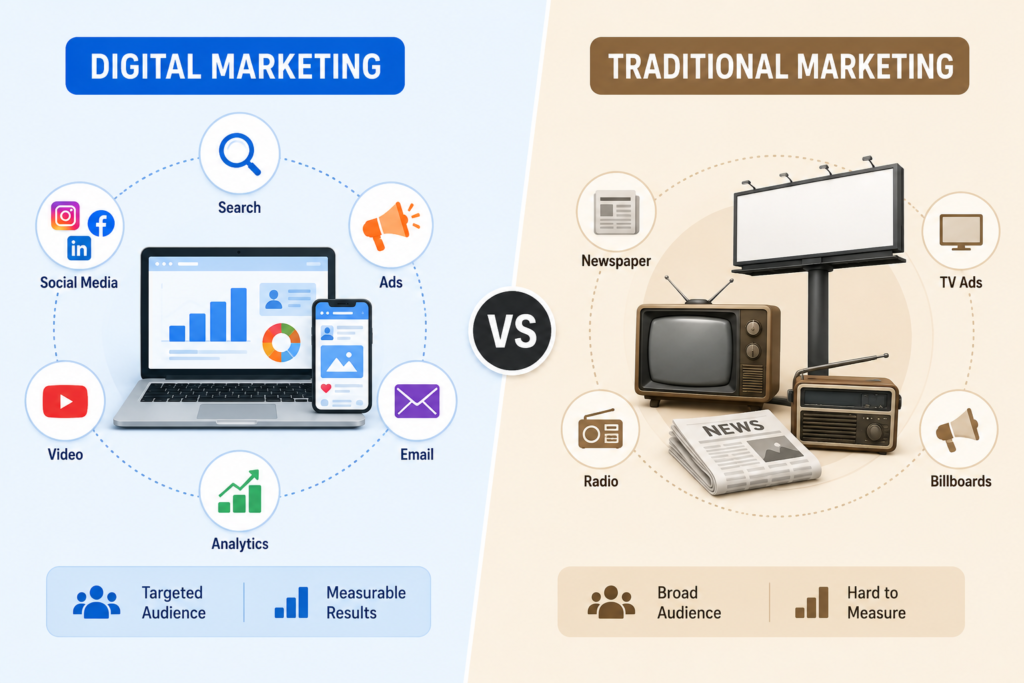
Digital Marketing vs Traditional Marketing
| Digital Marketing | Traditional Marketing |
|---|
| Online platforms | Offline channels |
| Targeted audience | Broad audience |
| Measurable results | Hard to measure |
| Cost-effective | Expensive |
| Instant feedback | Delayed feedback |
Common Digital Marketing Mistakes Beginners Should Avoid
- Ignoring SEO
- Posting without a strategy
- Not understanding the target audience
- Running ads without proper research
- Inconsistent branding
- Not tracking results
Avoiding these mistakes can save both time and money.
How to Start Digital Marketing as a Beginner
If you’re just starting, follow these simple steps:
Step 1: Learn the Basics
Understand SEO, social media, and content marketing.
Step 2: Choose a Niche
Focus on a specific area like social media or SEO.
Step 3: Build Your Online Presence
Create a website or social media profiles.
Step 4: Practice
Start a blog, run small ad campaigns, or manage pages.
Step 5: Use Free Tools
Leverage free tools to learn and grow.
Step 6: Stay Updated
Digital marketing trends change quickly—keep learning.
Real-Life Examples of Digital Marketing
Understanding theory is important, but real-life examples make digital marketing easier to grasp.
1. Amazon
Amazon uses personalized recommendations based on your browsing and purchase history. This is a powerful example of data-driven marketing.
2. Zomato
Zomato is famous for its witty social media posts and push notifications. They use content marketing + social media marketing to engage users.
3. Nike
Nike runs powerful storytelling campaigns on Instagram and YouTube, focusing on emotions rather than just products.
4. Local Businesses
Even a small local shop can run Facebook or Google ads targeting nearby customers and increase foot traffic significantly.
Key Skills Required for Digital Marketing
To succeed in digital marketing, you don’t need a degree—but you do need the right skills:
- Creativity – For content, ads, and campaigns
- Analytical Thinking – To understand data and performance
- Communication Skills – To connect with audiences
- Basic Technical Knowledge – SEO, tools, websites
- Adaptability – Trends change quickly
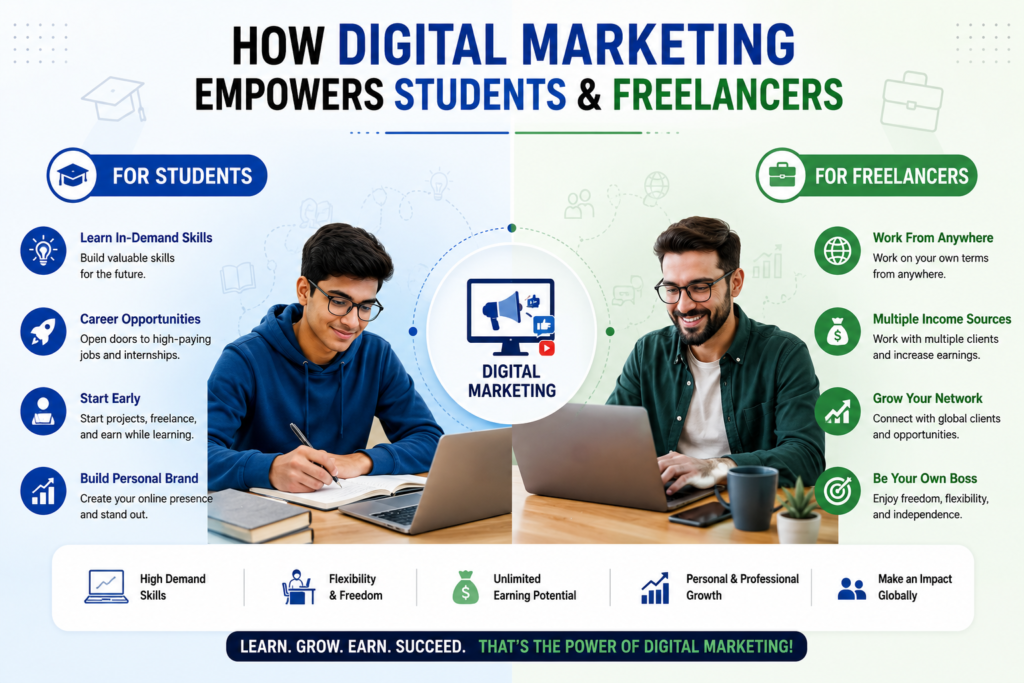
How Digital Marketing Helps Students & Freelancers
Digital marketing is not only for businesses—it’s also a great career option.
For Students:
- Learn high-demand skills
- Start freelancing early
- Build a personal brand
For Freelancers:
- Work with global clients
- Earn from multiple sources
- Build long-term career growth
Popular freelance roles include:
- Social Media Manager
- SEO Specialist
- Content Writer
- Ads Expert
Latest Digital Marketing Trends You Should Know
Staying updated with trends is very important. Here are some current trends shaping the industry:
1. Short-Form Video Content
Platforms like Instagram Reels and YouTube Shorts are dominating attention.
2. AI Tools in Marketing
AI tools help in content creation, ad optimization, and customer support.
3. Voice Search Optimization
People are increasingly using voice assistants like Alexa and Google Assistant.
4. Personalization
Customers expect personalized experiences based on their behavior.
5. Influencer Marketing Growth
Micro-influencers are becoming more powerful than big celebrities.
Simple Digital Marketing Strategy for Beginners
If you want a practical roadmap, follow this:
- Create a simple website or landing page
- Start posting valuable content on Instagram or LinkedIn
- Learn basic SEO and optimize your content
- Run small-budget ads to test performance
- Track results and improve continuously
Consistency is more important than perfection.
Final Thoughts
Digital marketing is not just a trend—it’s the future of business and communication. Whether you want to grow a brand, start a career, or earn online, learning digital marketing gives you a strong advantage.
The best part? You don’t need huge investment—just time, effort, and the willingness to learn.
Start small, stay consistent, and keep improving. Over time, your skills will turn into real results.