What is SEO? A Complete Beginner’s Guide
In today’s digital world, simply having a website is not enough. If people can’t find your website on search engines like Google, your business is missing out on valuable traffic, leads, and sales. This is where SEO comes into play.
SEO, or Search Engine Optimization, is one of the most powerful digital marketing strategies that helps your website rank higher in search engine results. In this beginner’s guide, we’ll break down everything you need to know about SEO in a simple and easy-to-understand way.
What is SEO?
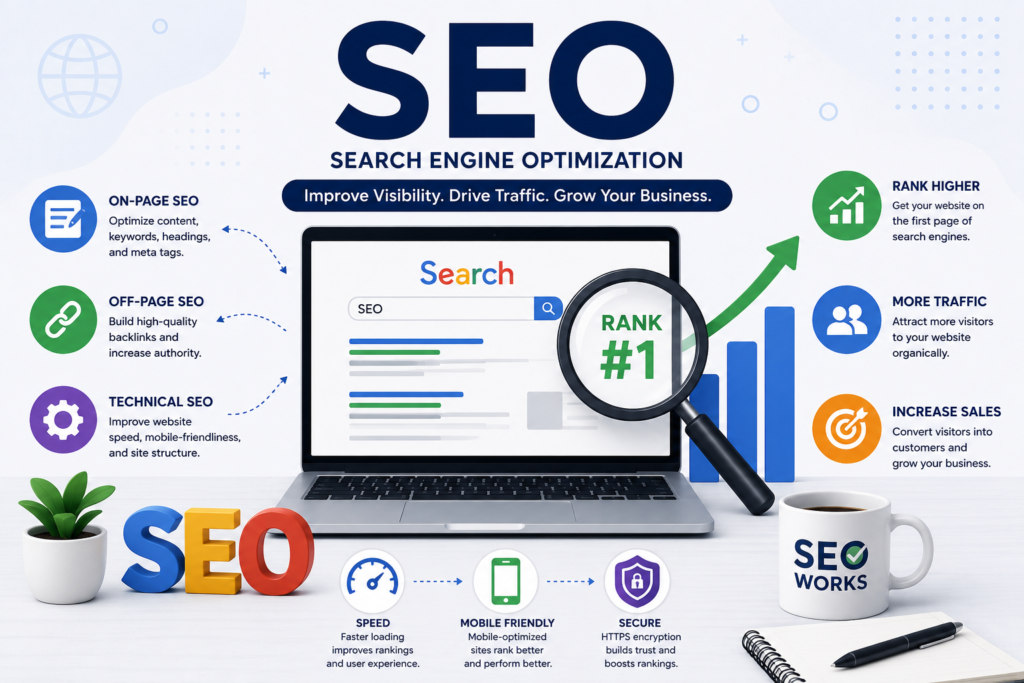
SEO (Search Engine Optimization) is the process of improving your website so that it appears higher in search engine results pages (SERPs) when people search for relevant keywords.
For example, if someone searches “best digital marketing agency,” SEO helps your website show up on the first page of Google.
The main goal of SEO is to:
- Increase website visibility
- Drive organic (free) traffic
- Improve user experience
- Generate leads and sales
Why is SEO Important?
Every day, billions of searches are made on Google. Most users click on results that appear on the first page. If your website is not ranking well, you are losing potential customers.
Here’s why SEO is important:
1. Increases Organic Traffic
SEO helps bring free traffic to your website without paying for ads.
2. Builds Trust and Credibility
Websites that rank higher are often seen as more trustworthy by users.
3. Better User Experience
SEO improves website speed, mobile-friendliness, and usability.
4. Long-Term Results
Unlike paid ads, SEO provides long-lasting results over time.
How Do Search Engines Work?
Search engines like Google use bots (also called crawlers) to scan websites and understand their content.
There are three main steps:
1. Crawling
Search engines discover new and updated pages using bots.
2. Indexing
The content is stored and organized in a database.
3. Ranking
Search engines decide which pages to show first based on relevance and quality.
Types of SEO
SEO is divided into three main types:
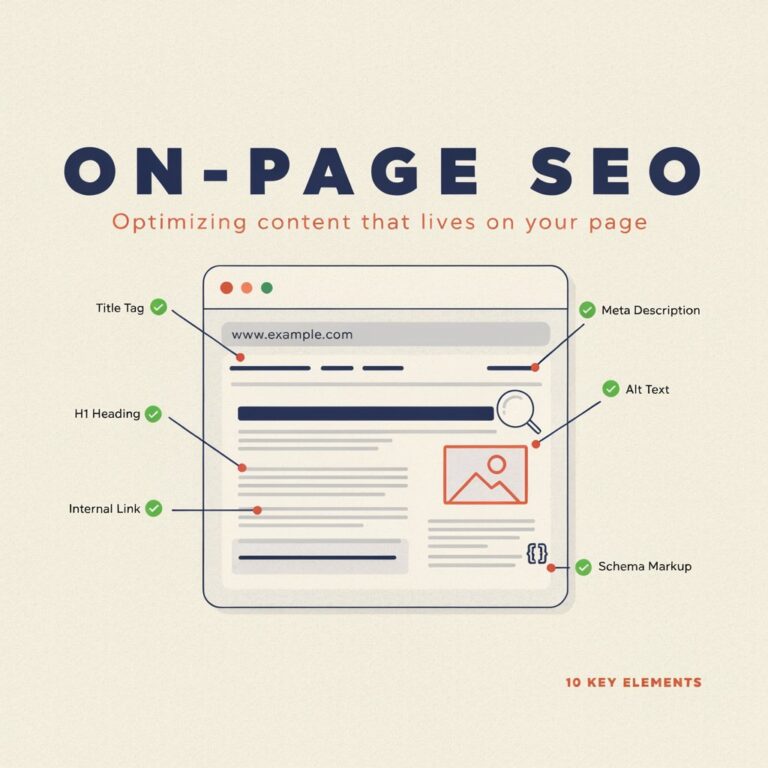
1. On-Page SEO
This includes everything you do on your website.
Examples:
- Using proper keywords
- Writing high-quality content
- Optimizing titles and meta descriptions
- Using headings (H1, H2, H3)
- Adding internal links
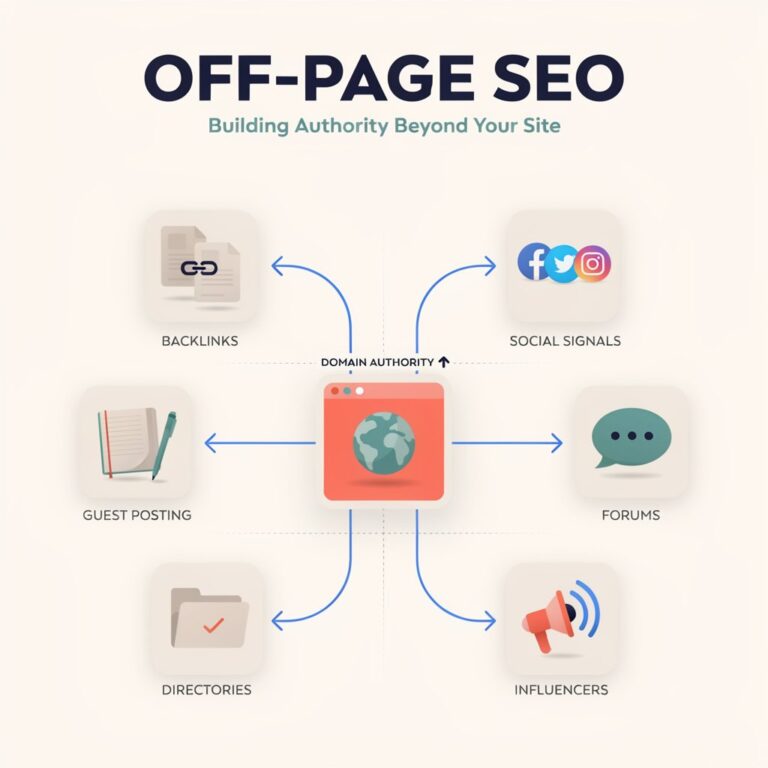
2. Off-Page SEO
This focuses on activities outside your website.
Examples:
- Backlinks (links from other websites)
- Social media promotion
- Influencer outreach
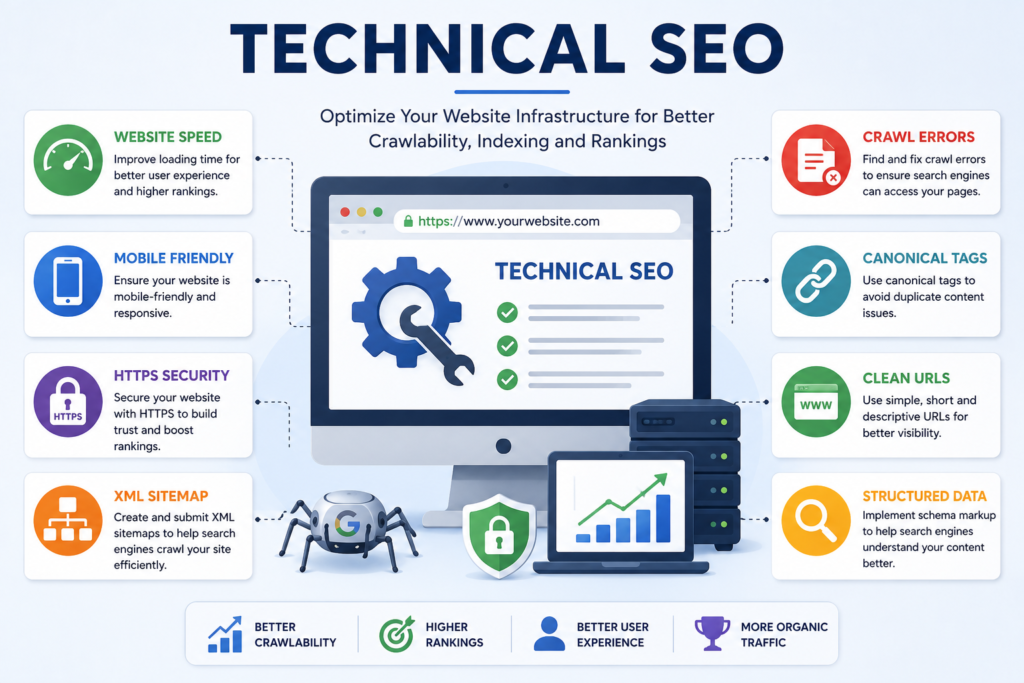
3. Technical SEO
This ensures your website is easy for search engines to understand.
Examples:
- Website speed
- Mobile responsiveness
- Secure website (HTTPS)
- XML sitemap
- Fixing broken links
What are Keywords in SEO?
Keywords are the words or phrases people type into search engines.
For example:
- “What is SEO”
- “Digital marketing services”
- “Best SEO tips for beginners”
Choosing the right keywords is very important because they help search engines understand your content.
Types of Keywords:
- Short-tail keywords (e.g., SEO)
- Long-tail keywords (e.g., SEO tips for beginners)
Long-tail keywords are easier to rank and more specific.
On-Page SEO Basics
Here are some simple on-page SEO techniques beginners should follow:
1. Title Tag Optimization
Use your main keyword in the title.
2. Meta Description
Write a short and attractive description to improve click rates.
3. Use Headings Properly
Structure your content using H1, H2, and H3 tags.
4. Image Optimization
Use alt text and compress images for faster loading.
5. Internal Linking
Link to other pages on your website.
Off-Page SEO Basics
Off-page SEO mainly focuses on building authority.
1. Backlinks
Getting links from high-quality websites improves your ranking.
2. Social Sharing
Sharing your content on social media increases visibility.
3. Guest Posting
Writing articles on other websites helps you gain backlinks.
Technical SEO Basics
Technical SEO ensures your website performs well.
Key Factors:
- Fast loading speed
- Mobile-friendly design
- Secure website (HTTPS)
- Clean URL structure
- Fixing crawl errors
Common SEO Mistakes Beginners Should Avoid
Many beginners make mistakes that can hurt rankings. Avoid these:
- Keyword stuffing (overusing keywords)
- Copying content
- Ignoring mobile optimization
- Not updating content regularly
- Poor website speed
How Long Does SEO Take?
SEO is not a quick process. It takes time to see results.
- 1–3 months: Initial improvements
- 3–6 months: Noticeable traffic growth
- 6–12 months: Strong results
Consistency is the key to success in SEO.
Final Thoughts
SEO is one of the most effective ways to grow your online presence. It may seem complicated at first, but once you understand the basics, it becomes much easier.
Start with simple steps:
- Choose the right keywords
- Create valuable content
- Optimize your website
- Be consistent
With time and effort, SEO can bring massive growth to your website and business.