What is Social Media Marketing? A Beginner’s Guide
In today’s digital world, social media has become more than just a place to connect with friends and share photos. It has transformed into a powerful business tool that helps brands grow, engage with customers, and increase sales. This is where Social Media Marketing (SMM) comes in.
If you’re new to digital marketing, this beginner-friendly guide will help you understand what social media marketing is, why it matters, and how you can get started.
What is Social Media Marketing?
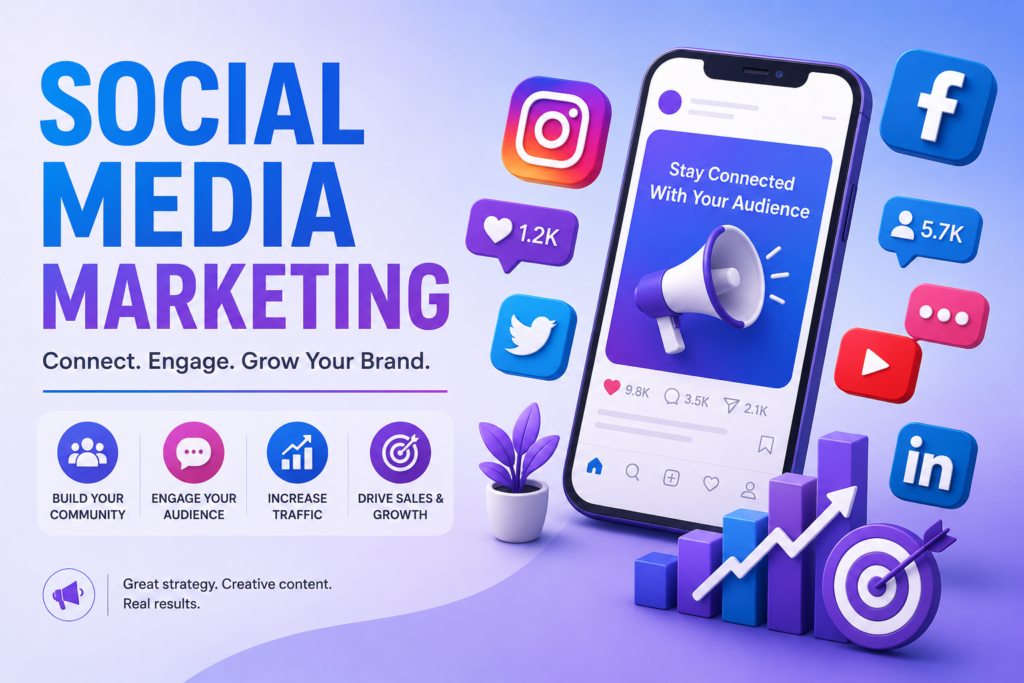
Social Media Marketing (SMM) is the process of using social media platforms like Instagram, Facebook, LinkedIn, Twitter (X), and YouTube to promote a brand, product, or service.
It involves:
- Creating and sharing content
- Engaging with your audience
- Running paid advertisements
- Building a strong online presence
The main goal of social media marketing is to connect with your audience, build trust, and drive business growth.
Why is Social Media Marketing Important?
1. Massive Audience Reach
Billions of people use social media daily. It gives you the opportunity to reach a large audience globally or locally.
2. Cost-Effective Marketing
Compared to traditional advertising, social media marketing is affordable and gives better results even with a small budget.
3. Direct Customer Interaction
You can directly communicate with your audience through comments, messages, and polls.
4. Brand Awareness
Regular posting helps people recognize and remember your brand.
5. Lead Generation & Sales
With the right strategy, social media can turn followers into customers.
Popular Social Media Platforms
Each platform serves a different purpose. Choosing the right one is important:
- Instagram – Best for visuals, reels, and brand engagement
- Facebook – Great for ads, groups, and local businesses
- LinkedIn – Ideal for B2B and professional networking
- YouTube – Perfect for long-form video content
- Twitter (X) – Good for updates, trends, and quick engagement
How Social Media Marketing Works
Social media marketing is not just about posting randomly. It follows a proper strategy:
1. Set Your Goals
Decide what you want to achieve:
- Brand awareness
- Website traffic
- Lead generation
- Sales
2. Identify Your Target Audience
Understand your audience:
- Age, location, interests
- Problems they face
- What type of content they like
3. Create Quality Content
Content is the heart of SMM. Types of content include:
- Images & graphics
- Videos & reels
- Educational posts
- Stories & polls
4. Be Consistent
Posting regularly keeps your audience engaged and builds trust.
5. Engage with Your Audience
Reply to comments, messages, and interact with followers to build relationships.
6. Use Paid Ads
Platforms like Facebook and Instagram offer ads to reach a targeted audience quickly.
7. Analyze & Improve
Track performance using analytics tools and improve your strategy.
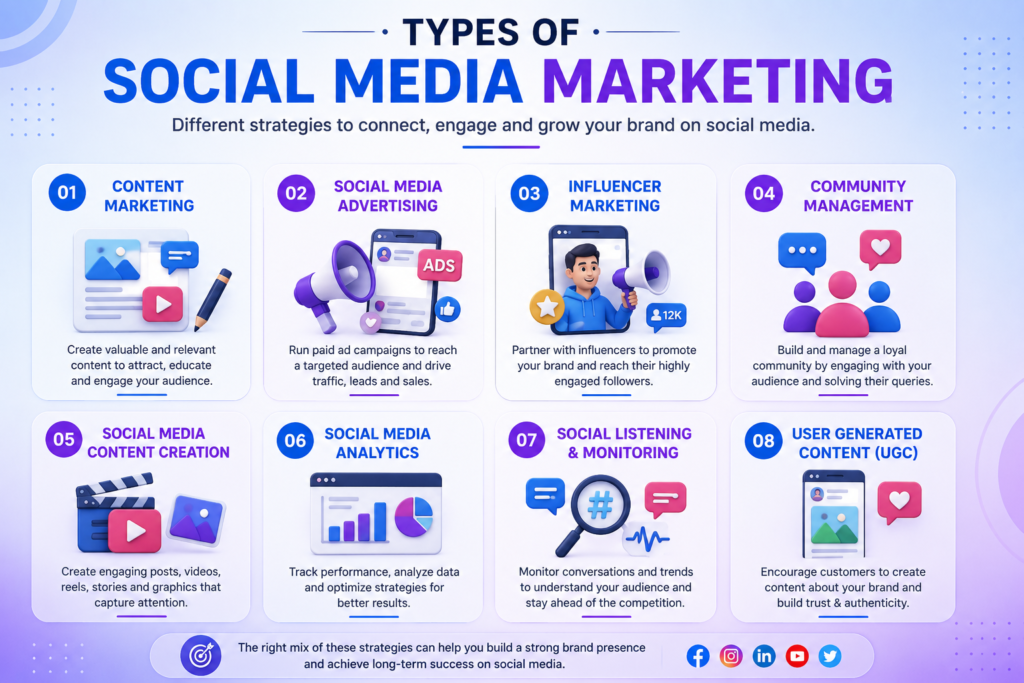
Types of Social Media Content
To succeed, you need a mix of content:
- Educational Content – Tips, guides, how-to posts
- Entertaining Content – Memes, reels, trends
- Promotional Content – Product or service posts
- Engagement Content – Polls, Q&A, quizzes
Benefits of Social Media Marketing
Here are the key benefits:
- Increases brand visibility
- Builds trust and credibility
- Drives website traffic
- Generates leads and sales
- Improves customer relationships
- Provides valuable audience insights
Common Mistakes Beginners Make
Avoid these mistakes:
- Posting without a strategy
- Ignoring audience engagement
- Inconsistent posting
- Over-promoting products
- Not analyzing performance
Beginner Tips for Success
If you’re just starting, follow these simple tips:
- Start with 1–2 platforms only
- Focus on quality over quantity
- Use trending formats like reels
- Maintain a consistent posting schedule
- Learn from competitors
- Keep experimenting and improving
Future of Social Media Marketing
Social media is constantly evolving. Some key trends include:
- Short-form video content (Reels, Shorts)
- AI-driven marketing tools
- Influencer collaborations
- Personalized content
Businesses that adapt to these trends will grow faster.
Conclusion
Social Media Marketing is one of the most powerful tools for growing your business online. Whether you are a student, entrepreneur, or small business owner, learning SMM can open many opportunities.
By understanding your audience, creating valuable content, and staying consistent, you can build a strong online presence and achieve long-term success.